I am riding in a motorcycle sidecar through Tiananmen Square.
It is sometime in the 1990s. My red hair, long then, much longer than it is now, is catching the wind, and people on the sidewalk are doing double-takes. Not small ones. Full stops, turning heads, the kind of stare that a person quickly converts into a casual glance when they realize they've been caught. A red-haired foreigner in a sidecar will do that in Beijing. I held the sides of the car and felt the city move through me.
The sidecar vibrated with a frequency that moved up through the seat and into my spine and back teeth. Every crack in the road announced itself. The exhaust from the cars around us hung in the warm air with a particular thickness, the smell of a city burning older fuels, not yet modernized into something cleaner. It smelled like effort. Like a place working hard and not minding that you knew it.
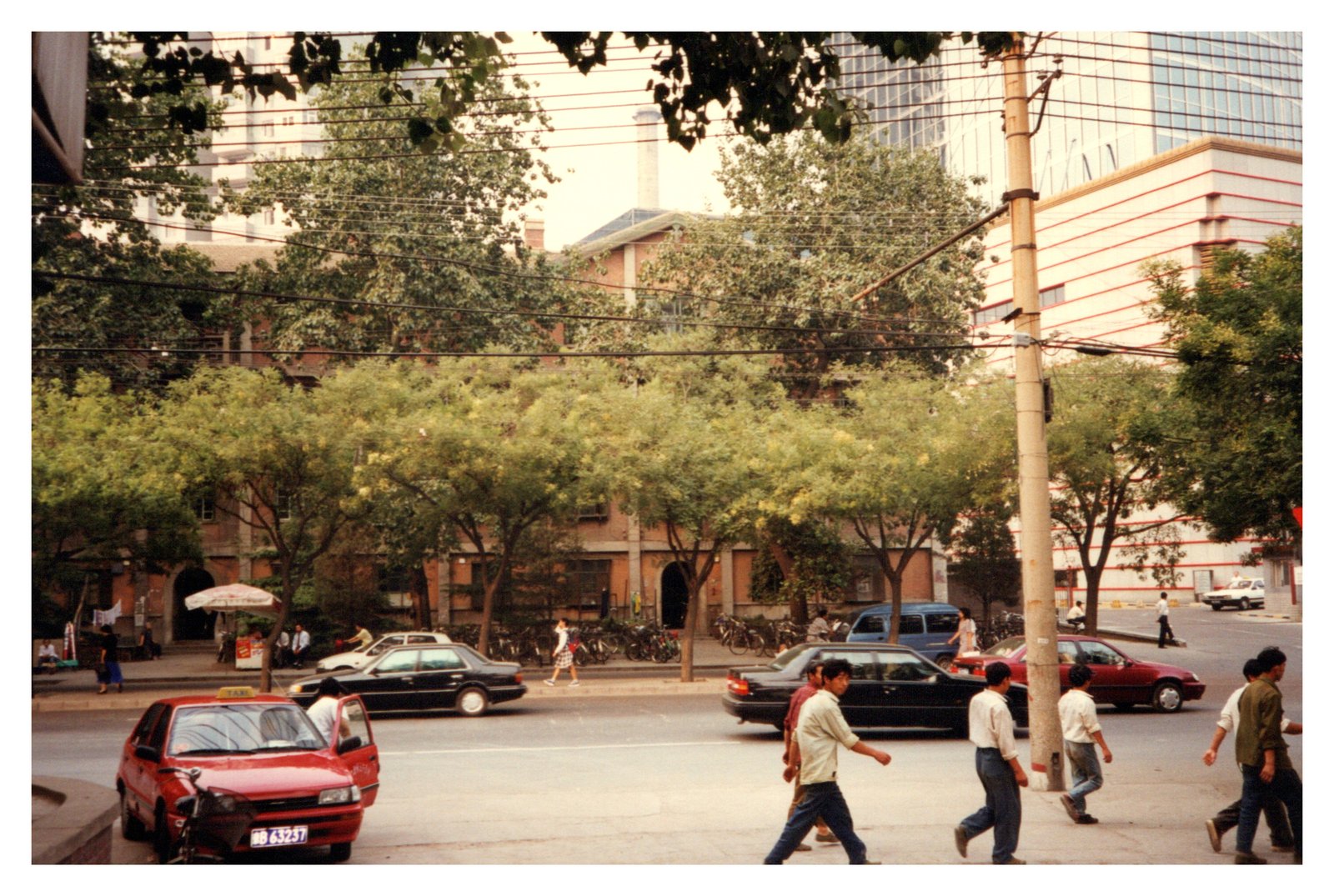
The motorcycle itself was a relic, grey, stocky, built like something that had survived a war and expected to survive several more. It rattled and announced itself long before it arrived anywhere. And the man driving it was enormously proud of it. You could see it in how he sat, straight-backed, chin lifted slightly, a man at the helm of something entirely his own.
His name I no longer carry with me, which is one of the small losses of a life lived in motion. He was a bellman at the hotel, short, young, handsome in an energetic way, the kind of person whose presence fills a room larger than his size would suggest. His English was minimal. We built our friendship the way you build friendships across language barriers, slowly, through gesture and proximity, the willingness to occupy space near each other without the pressure of words.
The bellman had been part of the Tiananmen Square uprising in 1989. He never said this directly. He was notably cautious about saying much of anything regarding politics or the recent past, a particular quality of silence, not evasion but a careful stillness, the stillness of someone who has learned that certain words carry weight and that weight has consequences. When we rode through the Square, I watched his face. He looked straight ahead. Whatever he carried about that place, he carried it privately, and I did not ask him to put it down.
The roads were enormous, wide enough to swallow a small American city, and they were filled, almost entirely, with bicycles. Not cars. Bicycles, thousands of them, moving together with a kind of organic patience that I had never seen before.From Chapter One
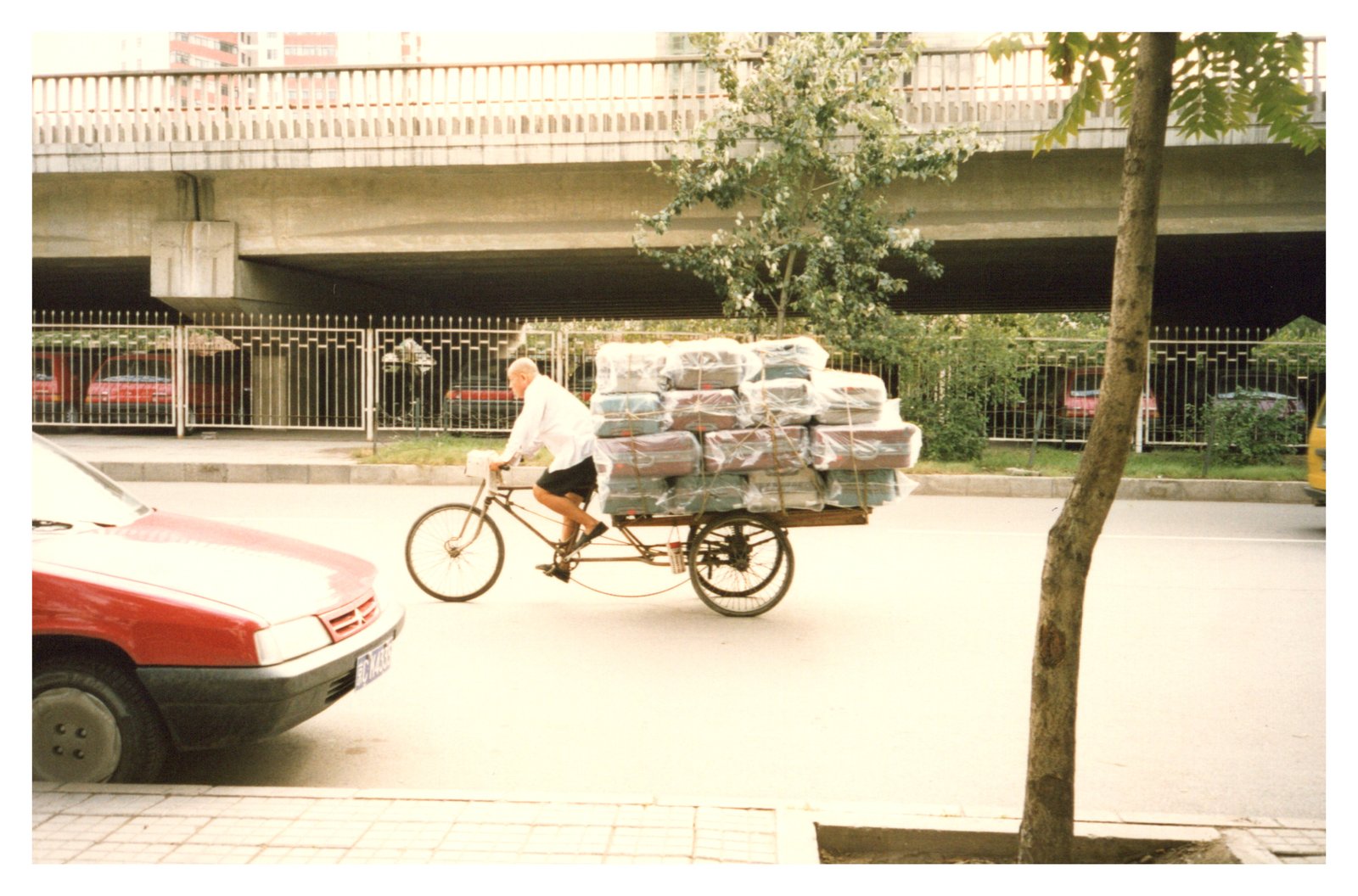
I had grown up in Florida, where everything was speed and sprawl and the assumption that forward motion required an engine. Here, the city breathed differently.
I was traveling with my father. It was his trip, he was there on business with IATA, preparing for a United Nations meeting. He had invited me along, and I had said yes, and for some reason that fact still carries weight when I hold it. My father, who had run ahead of me on a morning jog when I was five years old and never once looked back, had said: come to China with me.
So I came.
The Great Wall
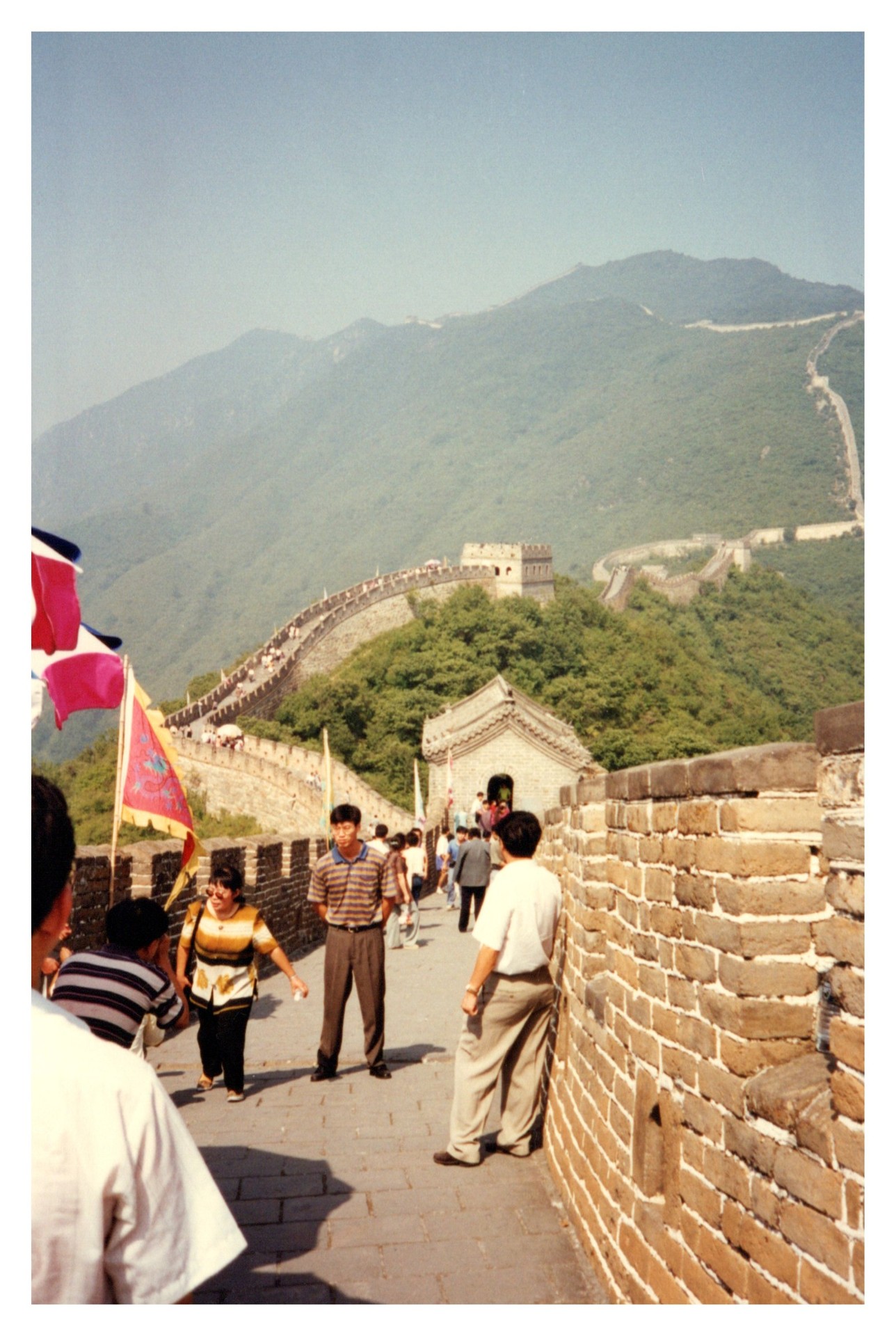
We went to the Great Wall. Not the tourist section, we had wandered, or been taken, to a quieter stretch where the stones were older and the signage sparse, a section that was not accustomed to foreign visitors. We were, with some clarity, not welcomed there. The people we encountered regarded us with an expression I recognized from my own childhood: this is not your place.
We stood there anyway, my father and I, together on the Wall, not belonging. And that, strangely, was where something between us began to ease. We had both been turned away from things we wanted. We were both, in that moment, equally out of place. Whatever complicated architecture had always stood between us, his distance, my hunger for something he didn't know how to give, was briefly simplified by the plain fact of our shared foreignness.
I don't think we said anything significant. I'm not sure we had to.
The Man on the Corner
One evening, near the hotel, I sat down next to a man who was repairing bicycles on the side of the road. We did not share a language. We did not try to. We sat together for a long time, twenty minutes, maybe thirty, in a silence that was entirely comfortable.
I have thought about that man many times since. About what it means to sit with another human being and need nothing from them except their presence. About how rare that is, and how far I had to travel, geographically, psychologically, spiritually, to be capable of it. The bike repairman didn't see me in any ways I had spent a lifetime needing to be seen. He just let me be there.
It was one of the most peaceful experiences of my life.
The Sleeping Giant
Across the street from our hotel, there was a building being taken down. Not demolished, taken apart. Men stood on the top of the remaining walls and worked methodically, brick by brick, removing each one carefully and passing it down to be stacked for reuse. Nothing was wasted. Nothing was thrown away.
I told my father: this place is a sleeping giant. One day it will wake up and the world will be different.
I didn't know, at the time, that I was also a sleeping giant of sorts. That I was carrying more than I understood. That the work of my life, like the work of those men on the wall, would be to take myself apart carefully, brick by brick, and figure out which pieces were worth saving.
Where does a life begin? Not with the first breath. Not even with the first heartbeat of a mother who doesn't yet know her child. It begins further back than that, in the whispered prayers of ancestors, the wounds they never fully healed, the wars they narrowly survived.